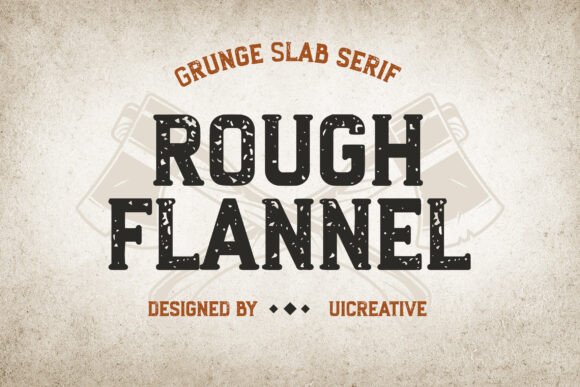
Rough Flannel: A Serif Font with Modern Sophistication
There's a particular kind of typeface that manages to feel both timeless and thoroughly contemporary. Rough Flannel is that kind of font. It carries the structural backbone of a classic serif but wears it with a modern confidence—clean enough for digital screens, distinctive enough for print, and versatile enough to anchor an entire brand identity without feeling repetitive or stale.
What makes Rough Flannel stand apart from the sea of premium fonts available today? It starts with its personality. The letterforms balance elegance with approachability. There's a warmth in the curves, a subtle softness in the terminals, and just enough contrast in the stroke weight to give text a rhythmic, almost editorial quality. It doesn't scream for attention. Instead, it earns it through quiet sophistication—the kind that makes a reader pause and appreciate the craftsmanship behind the words.
Where Rough Flannel Truly Shines
Think about the last time a magazine cover caught your eye or a brand's packaging felt instantly premium. Chances are, the typography played a significant role. Rough Flannel excels in exactly these moments. Its display font qualities make it ideal for logo design, where first impressions carry enormous weight. The letterforms have enough character to be memorable without sacrificing legibility, even at smaller sizes on business cards or social media profile images.
For editorial design, this typeface brings a refined presence to magazine spreads, book covers, and chapter headings. It pairs beautifully with photography, letting imagery breathe while still commanding attention through its own visual strength. Publishers working on lifestyle, fashion, or design-focused content will find it particularly well-suited—it carries both masculine and feminine qualities, which means it adapts naturally to a wide range of editorial voices without feeling forced or gendered.
Wedding stationery is another area where Rough Flannel performs exceptionally well. The elegant serif style gives invitations, programs, and thank-you cards a polished, celebratory feel. Unlike script fonts that can sometimes feel overly ornate or difficult to read at a glance, Rough Flannel offers that romantic sensibility while maintaining clarity. It's a practical choice for couples who want sophistication without sacrificing function.
Branding professionals will appreciate how the font supports brand identity systems across multiple touchpoints. From website headers to packaging design to social media graphics, Rough Flannel creates visual consistency. A boutique hotel, a artisanal food brand, a fashion label, a creative agency—each could adopt this typeface and make it distinctly their own. That adaptability is rare among display fonts, and it speaks to the thoughtful design work behind the letterforms.
Understanding the Font's Practical Strengths
Visual hierarchy matters in every design project, and typography is the primary tool for establishing it. Rough Flannel provides clear weight and style variations that make creating hierarchy straightforward. Use the bold weight for headlines to create immediate focal points. Drop to regular weight for subheadings. The contrast between these weights feels natural rather than jarring, which means layouts flow smoothly and readers instinctively know where to look first.
Readability is always a consideration, even with a display-oriented typeface. Rough Flannel handles this well because its designers clearly prioritized legibility alongside aesthetic appeal. The letter spacing feels balanced, the x-height provides comfortable reading at moderate sizes, and the serif details don't become muddy when rendered on screens. For web design applications, this means it works effectively in hero sections, pull quotes, and navigation elements where text needs to look striking but remain easy to parse.
One practical consideration worth noting: font pairing can make or break a design. Rough Flannel pairs well with clean sans serif fonts for body text, creating a classic editorial dynamic. It also complements certain handwritten or script fonts when used sparingly—a Rough Flannel headline followed by a delicate script accent can create beautiful visual tension in invitation design or social media layouts. The key is contrast without conflict. Test pairings in context rather than in isolation, and pay attention to how the x-heights and weights interact.
Making the Most of This Creative Font
Before committing any typeface to a project, take time to evaluate fit. Rough Flannel works best when the design calls for warmth, sophistication, and a touch of modern refinement. If your project leans heavily toward ultra-minimalist, geometric aesthetics, it might feel too organic. If it calls for raw, gritty, or industrial energy, the font's polished character could feel out of place. But for the vast middle ground—where most real-world design projects live—it's a remarkably strong choice.
Review the included styles and weights carefully. Understanding what the font family offers upfront saves time during production and ensures you're using it to its full potential. Check whether the character set includes the ligatures, alternates, and special characters your project requires. For multilingual projects, verify language support before finalizing your selection.
Licensing matters, especially for commercial use. If you're a small business owner creating branded materials, a designer working on client projects, or a publisher developing products for sale, confirm that the license covers your intended use. Most premium fonts come with clear commercial licensing terms, but it's worth reading the details rather than assuming. Protecting yourself legally is just as important as making good design choices.
For entrepreneurs and content creators building a brand identity from scratch, consider Rough Flannel as a foundational design asset. Choose it early in the process, then build your color palette, imagery style, and layout patterns around it. Typography that feels right from the start prevents costly redesigns later. It also creates cohesion across every customer touchpoint—from your website to your email newsletters to your product labels.
Ultimately, the best font choices feel invisible in the best way. They support the message without distracting from it. Rough Flannel achieves this balance with a kind of effortless grace that few modern display fonts manage. Whether you're designing a single wedding invitation or building a comprehensive brand system, it's a typeface worth serious consideration.