Mie Lobak: A Groovy Retro Slab Serif for Bold Designs
Stepping back into the groovier days of design doesn't mean sacrificing modern appeal. It means harnessing a specific energy—playful, bold, and unmistakably confident. That's the precise feeling Mie Lobak, a retro slab serif font from Maulana Creative, is built to deliver. This isn't just another typeface; it's a design tool with a distinct personality, crafted for projects that need to stand out and speak directly to a sense of fun and nostalgia.
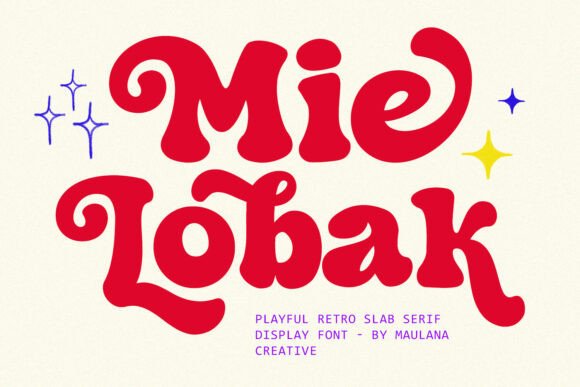
Visually, Mie Lobak is all about thick, chunky strokes and whimsical curves. Its high-contrast forms capture the essence of 1960s and 70s graphic design—think vintage posters, funky album covers, and playful advertising. The letterforms have a bold, rounded solidity that feels both friendly and impactful. As a premium font, it's more than just a set of characters; it's a comprehensive kit. The inclusion of a full set of alternates means you can swap out characters to create custom ligatures or stylistic variations, ensuring your typography feels unique and handcrafted rather than off-the-shelf.
Where Does This Retro Slab Serif Shine?
The true value of a creative font like Mie Lobak lies in its application. Its strongest suit is as a display font for headlines that demand attention. Imagine it gracing the masthead of a food blog, the title of an event poster, or the hero text on a landing page for a quirky brand. It injects immediate personality. For logo design, it offers a fantastic starting point for brands in the food & beverage, lifestyle, music, or boutique retail spaces that want to project a vibe that's approachable, nostalgic, and a little bit daring.
Beyond logos, this serif font finds a natural home in packaging design. A jar of artisanal jam, a bag of craft coffee, or a box of retro candy would feel instantly more authentic and engaging with Mie Lobak on the label. Its chunky forms ensure readability at a glance on a crowded shelf. For editorial design, it can be the perfect accent for chapter titles, pull quotes, or section headers in a magazine or cookbook, breaking up the monotony of body text and guiding the reader's eye.
Making It Work: Practical Considerations for Your Project
Choosing any commercial font requires a thoughtful evaluation. First, assess the project's tone. Mie Lobak excels when the goal is to evoke fun, nostalgia, or a bold, unapologetic style. It might not be the right fit for a law firm's annual report or a luxury brand seeking minimalist elegance. Its strength is its personality, so the project brief should align with that.
Next, consider font pairing. A strong display font like this works best when balanced with a simpler companion. Pair it with a clean sans serif font for body copy to ensure overall readability. A neutral sans serif like a geometric or humanist style can ground the playful energy of Mie Lobak, creating a clear visual hierarchy. Avoid pairing it with another highly decorative or script font, as this can create visual chaos.
Always test the font in context. Check the readability of your chosen words at the intended size, especially if using some of the more stylistic alternates. Review the full character set and alternates included—this is where you unlock its full potential for creating truly unique brand identity elements or social media graphics. Finally, ensure the licensing fits your use case. Mie Lobak is a commercial font, so confirm its license covers your specific project, whether for a client's brand identity, your own product line, or digital design assets.
Ultimately, integrating a font like Mie Lobak is about making a strategic choice. It influences not just how words look, but how they feel. It can boost audience engagement by resonating on an emotional level, enhance brand recognition through a distinctive typographic voice, and add a layer of professionalism that comes from intentional, cohesive modern typography. For the right project, it's a powerful tool to step back into the groovier days—with all the clarity and impact of contemporary design.